
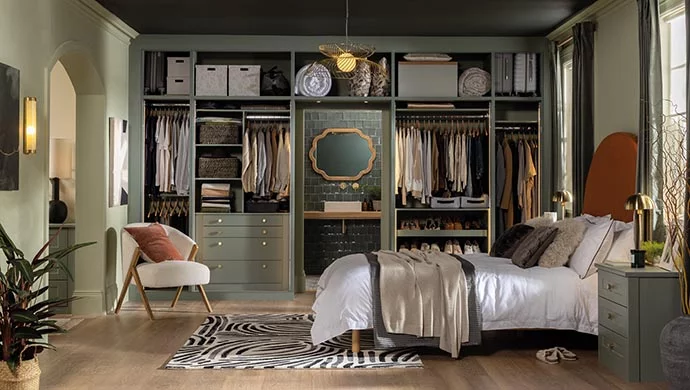
A messy bedroom has a way of starting your day before you do. You wake up already negotiating with piles, drawers, missing socks, half-clean clothes, and the small panic of not knowing where anything landed last night. Bedroom Organization Tips are not about making your room look staged for a magazine. They are about removing the tiny frictions that steal your calm before breakfast.
For many American homes, the bedroom now carries too many jobs. It is a sleep space, dressing room, laundry checkpoint, storage corner, and sometimes a laptop zone squeezed between a nightstand and a closet door. That pressure builds fast. A room can look “mostly fine” at bedtime and still feel hostile at 7:15 a.m.
A peaceful morning begins the night before, but it is built through systems you can repeat without thinking. When your bedroom supports your habits instead of fighting them, you stop starting each day in recovery mode. Thoughtful changes, like better closet flow, clearer surfaces, and smarter storage choices, can make your home feel more settled. Even small updates shared through better home organization ideas can help you build a space that feels easier to live in.
Build a Bedroom Layout That Reduces Morning Decisions
A peaceful bedroom is not always the biggest one. It is the one that places the right things in the right path. The goal is simple: your body should move through the room in the morning without bumping into clutter, searching through piles, or making decisions that should have been solved by the room itself.
How can furniture placement make mornings easier?
Furniture placement controls the mood of your morning more than most people admit. If your dresser blocks the closet door, your laundry basket sits across the room, or your nightstand holds everything except what you need, the layout is working against you. The room may look furnished, but it is not helping you live.
Start by tracing your first five minutes after waking. You get out of bed, turn off the alarm, find slippers or socks, check the weather, dress, and maybe grab a watch or glasses. Every item tied to that path should sit where your hand expects it. That sounds small, but small choices become loud when you are tired.
A common U.S. apartment problem is the bedroom with one narrow closet and barely enough room for a queen bed. In that setup, the best move is often not buying more storage. It is moving the dresser closer to the closet, placing the laundry hamper beside the dressing path, and keeping the floor clear around the bed. The room begins to work like a quiet routine instead of a maze.
Why should your bedroom have clear zones?
Clear zones make your bedroom easier to reset because every area has a job. Your bed is for sleep. Your dresser is for daily clothing. Your nightstand is for nighttime needs. Your chair, if you have one, should not become a second closet. Once a zone loses its job, clutter moves in fast.
A smart bedroom does not need labels or bins everywhere. It needs boundaries. Keep grooming items near the mirror, daily accessories near the exit path, and laundry near the place where clothes actually come off. Many people place storage where it looks neat, not where behavior happens. That is why the system fails by Wednesday.
The counterintuitive truth is that a slightly less “pretty” layout may create a calmer room. A hamper beside the closet might not look as polished as one tucked in a corner, but if it catches clothes every night, it wins. A bedroom that supports real behavior will always beat one arranged for a photo.
Use Bedroom Organization Tips to Control Closet Clutter
Closet clutter rarely starts because people own too much. It starts because the closet has no rules. Clothes sit together with luggage, old bedding, seasonal coats, memory boxes, and the jeans you might wear again someday. That kind of mix turns every morning into a search mission, and search missions are a terrible way to begin the day.
What should stay in your daily closet space?
Daily closet space should serve the current season and your real weekly life. Work clothes, casual basics, sleepwear, activewear, and shoes you wear often deserve the easiest access. Off-season items, formalwear, spare linens, and sentimental clothing should move higher, deeper, or outside the main reach zone.
This matters in homes where storage is limited. A family in a small ranch house in Ohio may not have a walk-in closet, but they can still create order by dividing the closet by use. The front section holds weekday clothes. A top shelf holds sealed bedding. A side bin holds seasonal accessories. Nothing fancy. Still effective.
Many people organize by category but forget frequency. That is the mistake. A winter coat you wear twice a year should not take prime closet space in July. A black work cardigan you wear twice a week should not be buried behind event outfits. Storage should honor your life, not your wishful thinking.
How do you stop clothes from landing on chairs?
The chair pile is not a character flaw. It is a design failure. Clothes land there because they are not clean enough for the drawer, not dirty enough for the hamper, and not assigned a better place. Until you create that middle zone, the chair will keep collecting evidence.
Add one small hook rail, over-door rack, or shallow basket for “worn once” items. Keep it limited. The point is not to create a new dumping ground. The point is to give transitional clothing a short-term home until laundry day. When the container fills, it forces a decision.
This one habit can change the whole room. A bedroom with no chair pile feels calmer even if the closet is not perfect. You do not need a full closet makeover to get that effect. You need one honest answer to where half-worn clothes should go.
Make Surfaces Calm Without Making Them Empty
Clear surfaces help a bedroom feel peaceful, but empty surfaces are not always practical. You need a place for a lamp, book, water glass, charger, glasses, lotion, or medication. The goal is not minimalism for its own sake. The goal is to stop every flat surface from becoming a landing strip for the day’s leftovers.
What belongs on a nightstand?
A nightstand should hold only the things that support sleep, waking, or health. A lamp, phone charger, book, water, tissues, and one small tray can be enough. Anything related to errands, receipts, mail, extra jewelry, or random coins should move out of the bedroom or into a closed drawer.
The tray is more powerful than it looks. It creates a boundary. When small items sit loose on a nightstand, they look like clutter. When they sit inside a tray, they look intentional. The brain reads containment as order, even when the number of items has not changed.
A nightstand also needs a weekly reset. Sunday evening works well for many households because laundry, school prep, and work bags often happen then. Clear the surface, empty the cup, return books, and remove anything that belongs elsewhere. Five minutes can protect five mornings.
How can dressers stay neat all week?
Dressers become messy when they are treated as a holding area instead of a finished surface. Keys, hair ties, folded laundry, shopping tags, and yesterday’s outfit all land there because the dresser is waist-height and convenient. Convenience without rules always becomes clutter.
Give the dresser one purpose beyond storage. It might hold a jewelry dish, a small lamp, a framed photo, or a folded tray for daily accessories. Leave open space around that anchor. When the top has a clear visual structure, random items look out of place faster, and you are more likely to remove them.
The surprising part is that beauty can help discipline. A dresser you enjoy looking at is harder to bury under laundry. This does not mean buying new decor. It may mean removing five objects so one meaningful object can breathe. Calm often comes from subtraction, not shopping.
Create Storage That Matches Real Morning Habits
Storage works when it follows behavior. It fails when it asks you to become a different person overnight. A bedroom system should respect how you wake up, how you dress, how often you do laundry, and how much time you have before leaving the house. If it needs a perfect mood to work, it is not a system.
Which storage choices work best for small bedrooms?
Small bedroom storage should go vertical, hidden, and close to the point of use. Under-bed boxes can hold off-season clothing, extra blankets, or shoes. Wall hooks can handle bags and robes. Drawer dividers can stop socks, belts, and basics from turning into one mixed pile.
The trick is to avoid filling every hidden space with forgotten stuff. Under-bed storage can help, but only when the items are labeled and easy to pull out. A plastic bin shoved under the bed without a label becomes a small basement you never visit. Good storage should be reachable, visible, or clearly marked.
Apartment renters in cities like Chicago, Dallas, or Phoenix often cannot add built-ins, but they can still improve bedroom storage ideas with freestanding shelves, slim rolling carts, and bed frames with drawers. The best choice is the one that solves a repeated problem. Buy for the habit, not the fantasy room.
How do you make laundry less stressful?
Laundry stress begins when dirty clothes, clean clothes, and worn-once clothes share the same territory. Once those categories blur, you lose trust in every pile. That is when mornings get tense because the shirt you need might be clean, might be dirty, or might be somewhere between.
Use three destinations. Dirty clothes go into the hamper. Clean clothes get folded or hung within one day. Worn-once clothes go to the small middle-zone hook or basket. This may sound too simple, but simple systems survive tired evenings.
A peaceful laundry rhythm also needs a realistic schedule. A single person may handle one weekday load and one weekend reset. A family may need smaller loads more often. The right system is not the one that sounds disciplined. It is the one you can repeat during a normal week when dinner runs late and nobody feels like folding towels.
Protect the Morning Mood Before the Day Starts
A bedroom is the last room you see at night and the first room you meet in the morning. That gives it unusual power. You do not need a perfect room to feel calmer, but you do need a room that stops throwing unfinished decisions at you before your feet hit the floor.
What evening reset keeps mornings peaceful?
An evening reset should be short enough that you will actually do it. Put clothes where they belong, clear the nightstand, set tomorrow’s outfit within reach, and return loose items to their zones. Ten minutes is plenty when the room already has a structure.
The outfit step matters most for busy mornings. You do not need to plan every detail like a school uniform. You only need to remove the first stressful decision of the day. Check the weather, choose the clothes, and place them where you can reach them without opening three drawers.
This habit helps people who leave early for work, parents who manage school drop-offs, and anyone who wakes up with limited patience. The bedroom becomes less of a decision zone and more of a launch point. That shift changes the emotional temperature of the whole morning.
How can you keep the system from falling apart?
A bedroom system falls apart when it depends on perfection. Build in recovery points instead. A weekly reset, a donation bag in the closet, a laundry cutoff time, and a five-minute surface check can bring the room back before clutter spreads.
Keep a donation bag where you dress. When a shirt pinches, a sweater never gets chosen, or shoes hurt every time, place them in the bag instead of returning them to storage. Most clutter is delayed honesty. The room improves when you stop storing decisions you already made in your head.
Maintenance should feel ordinary, not dramatic. You are not overhauling your bedroom every weekend. You are returning it to a state that helps you sleep, wake, dress, and leave with less friction. That is the real promise of an organized bedroom.
Conclusion
Peaceful mornings do not come from waking up earlier or buying matching containers. They come from removing the small points of resistance that greet you before the day has even started. Your bedroom should help you move, dress, think, and breathe without demanding fresh energy at every step.
The best Bedroom Organization Tips are the ones that respect your real life. They allow for tired nights, small closets, shared spaces, laundry delays, and the fact that nobody wants to make twelve decisions before coffee. A strong system does not shame you into being neater. It quietly makes the better choice easier.
Start with one pressure point. Clear the chair pile. Reset the nightstand. Move the hamper. Choose tomorrow’s clothes before bed. One solved problem creates momentum, and momentum changes the room faster than guilt ever will.
Give your bedroom one honest hour this week, and let your next morning prove the work was worth it.
Frequently Asked Questions
How do I organize my bedroom for a calmer morning routine?
Start with the areas you touch first: nightstand, closet, dresser, and laundry spot. Keep daily items within easy reach, remove anything unrelated to sleep or dressing, and prepare tomorrow’s outfit before bed. A calm morning depends on fewer choices, not a perfect room.
What are the best small bedroom storage ideas for apartments?
Use under-bed bins, wall hooks, drawer dividers, slim shelves, and storage furniture that serves more than one job. Keep daily items easy to reach and move seasonal pieces higher or farther back. Small bedrooms work best when storage follows your actual habits.
How can I keep my bedroom clean without spending hours?
Create a daily five-minute reset and a weekly deeper pass. Put clothes away, clear surfaces, return loose items, and empty trash before clutter spreads. Short resets work because they stop the room from reaching the point where cleaning feels like a project.
What should I remove from my bedroom first?
Remove anything that does not support sleep, dressing, comfort, or personal care. Paperwork, random shopping bags, old cups, unused decor, and clothes you never choose should leave first. The fastest progress often comes from taking things out, not adding storage.
How do I stop clothes from piling up on a chair?
Create a specific place for worn-once clothing, such as a hook, small basket, or narrow rack. Keep the space limited so it cannot become another pile. Clothes need clear categories: clean, dirty, or worn once. Without that middle zone, the chair usually wins.
What is the easiest way to organize a messy closet?
Pull out anything you do not wear in the current season, then group the rest by use. Keep weekly clothing at eye level and move rare items higher or farther back. A closet becomes easier when it reflects how often you wear things.
How often should I reset my bedroom organization system?
A light reset should happen daily or every other day, while a deeper reset works well once a week. Seasonal closet checks can happen every three months. The goal is not constant cleaning. The goal is catching clutter before it turns into a full-room problem.
How can I make my bedroom feel peaceful without redecorating?
Clear the floor, reduce dresser clutter, simplify the nightstand, improve laundry flow, and remove items that belong in other rooms. Peace often comes from better order, not new decor. Once the room has breathing space, even old furniture can feel calmer.