
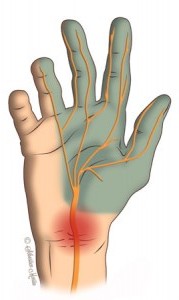
Carpal tunnel syndrome symptoms often include numbness, tingling, burning, or pain in the thumb, index finger, middle finger, and part of the ring finger. Symptoms frequently interrupt sleep. As pressure on the median nerve increases, grip weakness and difficulty handling small objects may develop.
Why Do Carpal Tunnel Symptoms Flare at Night?
The median nerve travels through a narrow passage in the wrist called the carpal tunnel. Increased pressure in that space can disturb feeling and movement in parts of the hand.
Night symptoms may become noticeable because the wrist stays bent during sleep or fluid shifts increase pressure around the nerve. People often wake up and shake the hand, change position, or hang the arm beside the bed for temporary relief.
The typical pattern matters. The little finger is usually less affected because its sensation mainly comes from a different nerve. MedlinePlus describes carpal tunnel syndrome as pressure on the median nerve that can cause pain, numbness, tingling, weakness, or muscle damage.
| Symptom | Typical experience | Daily effect |
| Tingling | Pins and needles | Wakes you at night |
| Numbness | Reduced fingertip feeling | Trouble with buttons |
| Pain | Wrist or hand aching | Interrupted work |
| Weakness | Less secure grip | Dropping objects |
Which Fingers Are Usually Affected?
Symptoms commonly involve the thumb, index finger, middle finger, and thumb-side portion of the ring finger. They may also spread toward the palm, wrist, or forearm.
Some people first notice symptoms while driving, holding a phone, reading, or gripping a tool. Desk work can contribute to wrist irritation, but keyboard use alone doesn’t establish the diagnosis. Adjusting desk habit changes may reduce aggravating wrist positions while you arrange an assessment for persistent symptoms.
Advanced cases may cause reduced thumb strength or wasting in muscles near the base of the thumb. That is more concerning than occasional tingling after sleeping awkwardly.
Is It Carpal Tunnel or Another Nerve Problem?
Neck problems, elbow-level nerve compression, arthritis, tendon irritation, diabetes-related nerve problems, and other conditions can cause hand symptoms. The location and timing offer clues, but they don’t provide certainty.
A clinician may check sensation, thumb strength, wrist position, reflexes, and whether symptoms occur outside the usual median-nerve area. Nerve studies may be considered when the diagnosis is unclear or symptoms are significant.
The MedlinePlus carpal tunnel resource provides a general overview of symptoms, causes, diagnosis, and treatment options.
What Should You Track Before Seeing a Clinician?
Record which fingers tingle, whether one or both hands are involved, and how often symptoms wake you. Note any dropping, weak pinching, loss of fingertip control, or trouble with buttons and jars.
A concise symptom log should also mention activities that provoke symptoms and how long relief lasts after changing wrist position. Avoid writing only “my whole hand hurts” when you can identify a clearer distribution.
Keep previous test reports, medication lists, and digital record keeping available for the appointment. Health conditions and previous wrist injuries can affect how the symptoms are interpreted.
Common Mistakes That Keep the Wrist Irritated
Wearing a brace too tightly can increase discomfort or create pressure elsewhere. A neutral-position night splint may help some people, but fit matters and it isn’t a complete answer for progressive weakness.
Another mistake is repeatedly stretching the wrist into positions that reproduce tingling. Painful nerve symptoms aren’t something to push through for flexibility.
People also wait too long when grip strength declines. Temporary nighttime tingling is different from persistent numbness, muscle loss, or objects repeatedly falling from the hand.
Red Flags: When to Get Medical Help
Arrange prompt medical evaluation for persistent numbness, increasing grip weakness, visible muscle loss near the thumb, or worsening difficulty performing normal hand tasks.
Seek urgent care after a significant wrist injury, especially when numbness appears suddenly or the hand becomes severely swollen, unusually pale, cold, or difficult to move. Sudden one-sided arm weakness accompanied by facial drooping, speech trouble, or other neurological changes requires emergency evaluation because it may not be a wrist problem.
Frequently Asked Questions
Can carpal tunnel affect both hands?
Yes. It may affect one or both hands, and the severity can differ between sides. Symptoms may begin in the dominant hand but aren’t limited to it.
Why do people shake their hands at night?
Changing the wrist position may briefly reduce pressure or alter the sensation, so shaking the hand can provide temporary relief. Repeated nighttime waking still deserves attention.
Does hand tingling always mean carpal tunnel syndrome?
No. Nerve irritation in the neck or elbow, circulation problems, other neuropathies, and local hand conditions can produce tingling. The finger pattern and examination findings help distinguish them.
Protect Hand Function Early
Track the exact fingers involved and watch for dropping, weak pinching, or lasting numbness. Reduce prolonged wrist bending and arrange an evaluation when symptoms repeatedly disturb sleep or affect hand control. Progressive weakness deserves earlier attention than occasional tingling.
This article provides general education and is not a diagnosis or substitute for care from a qualified healthcare professional.