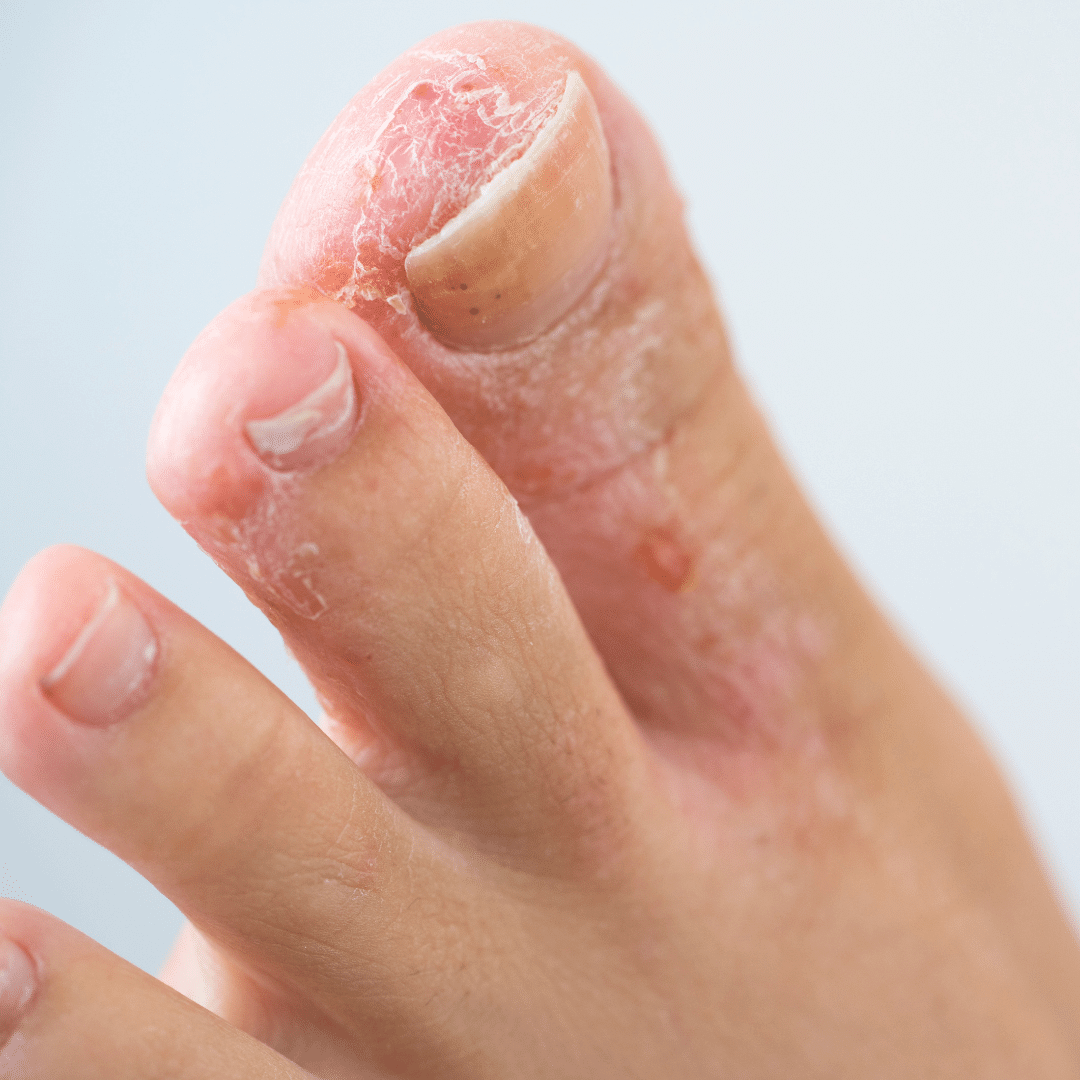
Athlete’s foot symptoms commonly include itching, burning, peeling, cracking, or whitish soggy skin between the toes. The infection may also affect the soles or sides of the feet and can produce blisters. It’s a fungal infection—not a condition limited to athletes—and persistent cases may spread to the toenails, hands, or groin.
What Does Athlete’s Foot Look Like?
The most familiar pattern begins between the toes, especially the fourth and fifth toes. Skin may become pale, damp, cracked, or tender. Other cases create dry scaling across the sole and heel, sometimes resembling unusually stubborn dry skin.
Small fluid-filled blisters can occur, although they’re less common. Scratching or skin breakdown may cause soreness and allow bacteria to enter. The CDC describes tinea pedis as a fungal infection that often affects spaces between the toes, where warm, dark, moist conditions support fungal growth.
| Pattern | What you may notice | Common area |
| Toe-web | White, peeling, cracked skin | Between toes |
| Moccasin-type | Dry scaling and thickened skin | Sole and heel |
| Blistering | Small itchy fluid-filled bumps | Arch or sole |
| Complicated | Redness, pain, drainage | Broken skin areas |
Why Does the Skin Between Toes Peel?
Moisture softens the skin and creates an environment where dermatophyte fungi can grow. Tight shoes, sweaty socks, repeated workouts, and incomplete drying between the toes may keep the area damp for hours.
Your workday wellness habits matter when closed footwear is worn through a long shift. Changing damp socks and allowing shoes to dry can remove part of the environment the fungus prefers. Still, hygiene alone may not cure an established infection.
Peeling can also come from eczema, contact reactions, psoriasis, excessive sweating, or bacterial conditions. That’s why a rash that behaves unusually shouldn’t be treated endlessly without confirmation.
How Does Athlete’s Foot Spread?
Fungal material can pass through direct contact or contaminated floors, towels, socks, shoes, and grooming tools. Locker rooms, pools, shared showers, and communal changing spaces create common opportunities for exposure.
Wear sandals in shared wet areas and avoid exchanging footwear. Wash hands after touching the affected skin. Adjusting active lifestyle routines may lower exposure, but you don’t need to stop exercising unless pain or medical advice requires it.
Athlete’s foot may spread from the feet to the toenails or groin through hands, towels, and clothing. Treating the feet while ignoring suspicious nail changes can contribute to recurring problems.
What Treatment Usually Helps?
Many mild cases respond to nonprescription antifungal creams, sprays, powders, or lotions. Apply the product exactly as directed and continue for the full label period. Powders may help manage moisture, but they don’t replace an effective antifungal when infection is established.
Keep feet clean and dry, change socks regularly, and rotate shoes so each pair dries. Your personal spending decisions don’t need to include a shelf full of competing remedies. One correctly selected product used consistently is more sensible than switching every two days.
The same fungal group causes ringworm elsewhere on the body, and CDC guidance lists athlete’s foot among skin infections commonly treated with topical antifungal medicines.
Mistakes That Make It Harder to Clear
Stopping treatment as soon as peeling improves is a common failure point. Fungal growth may remain even when the surface looks calmer. Applying a steroid-only cream can also suppress redness while allowing the infection to worsen.
Don’t share nail clippers, pumice stones, socks, or shoes during an active infection. Avoid cutting away damaged skin aggressively because small wounds increase discomfort and infection risk. And don’t assume cracked skin always needs more moisturizer; heavy occlusive products may trap moisture between the toes.
Red Flags: When to Get Medical Help
Seek medical advice if the foot becomes increasingly red, hot, swollen, painful, or begins draining pus. Fever, red streaking, rapidly spreading inflammation, or inability to walk comfortably may signal a bacterial complication.
People with diabetes, poor circulation, reduced sensation, or weakened immunity should have foot problems assessed early. Medical care is also appropriate when nonprescription treatment hasn’t helped, the nails are involved, blisters are extensive, or the diagnosis remains uncertain.
Frequently Asked Questions
Can athlete’s foot affect only one foot?
Yes. It may start on one foot before spreading, although other causes of peeling can also remain one-sided.
Why does athlete’s foot keep returning?
Common reasons include incomplete treatment, damp footwear, untreated nail fungus, shared surfaces, or reinfection from contaminated personal items.
Can moisturizer cure athlete’s foot?
Moisturizer may soften dry skin but won’t kill the fungus. Some heavy products can trap moisture and worsen toe-web conditions.
Dry the Environment and Treat Consistently
Begin with one evidence-based antifungal approach, keep the spaces between your toes dry, and continue treatment for the directed period. When symptoms remain stubborn or the skin shows infection warning signs, stop cycling through products and arrange a professional foot or skin examination.
This information is educational and does not replace diagnosis or treatment from a qualified healthcare professional.