
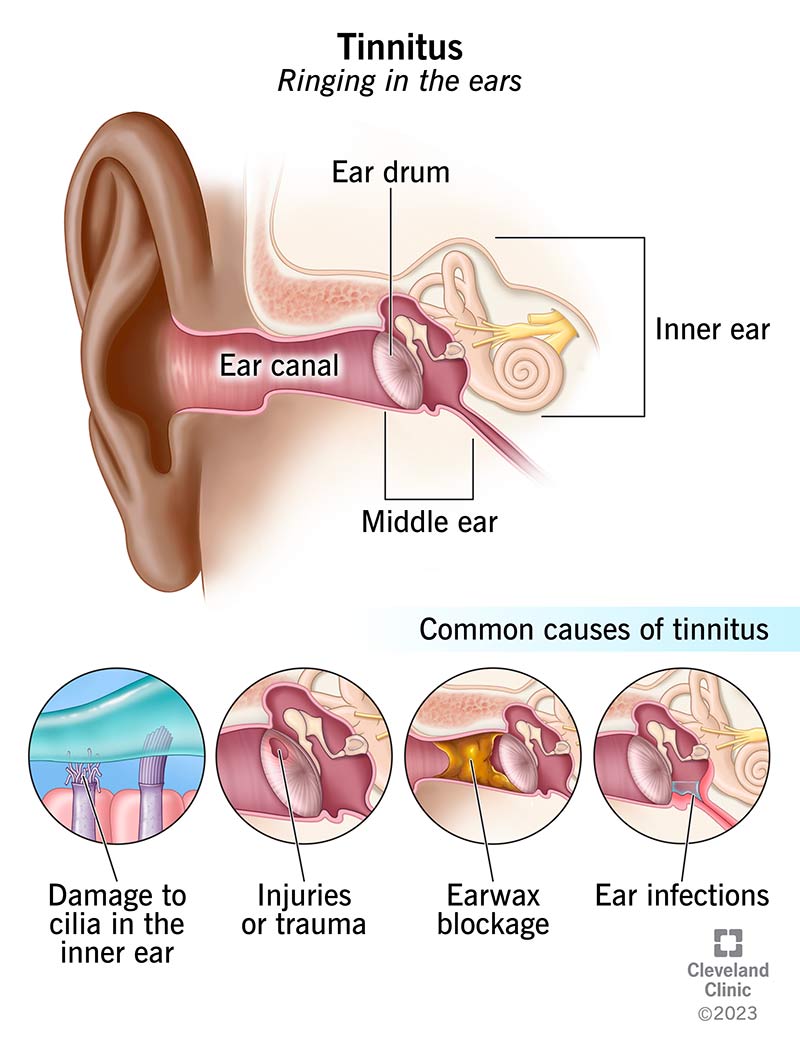
Tinnitus symptoms involve hearing a sound that does not come from an outside source. It may resemble ringing, buzzing, hissing, clicking, humming, roaring, or whistling. The sound can affect one ear, both ears, or seem to sit inside the head, and it may be constant or intermittent.
What Does Tinnitus Sound Like?
There is no single tinnitus sound. One person may hear a high electronic tone, while another notices a low hum or pulsing sensation. Volume and pitch may change throughout the day.
Quiet rooms often make tinnitus seem louder because fewer outside sounds compete with it. That does not necessarily mean the tinnitus has physically intensified. Attention, fatigue, stress, and recent noise exposure can alter how prominent it feels.
A quiet bedroom setup can support sleep, but complete silence may make internal sounds more noticeable for some people.
Is the Sound Constant or Intermittent?
Tinnitus may come and go, remain steady, or change when you move your jaw, neck, eyes, or head. NIDCD notes that body movement or touch can temporarily alter the perceived sound in some cases.
| Pattern | What you may notice | Useful detail to record |
| Constant | Sound is present most of the day | One ear or both |
| Intermittent | Episodes start and stop | Duration and trigger |
| Pulsing | Sound follows the heartbeat | Whether rhythm is exact |
| Somatic | Sound changes with movement | Jaw or neck position |
Keeping calmer evening surroundings may lower stress-related awareness, though it cannot determine why tinnitus started.
Why Tinnitus and Hearing Changes Often Appear Together
Tinnitus is frequently associated with changes in the auditory system. Loud-noise exposure can cause hearing damage and may also produce ringing, buzzing, or roaring.
Some people first notice difficulty understanding speech in noisy rooms. Others turn up the television or ask people to repeat themselves. Earwax blockage, middle-ear problems, jaw-joint issues, certain medicines, and inner-ear disorders may also be involved.
A hearing test is useful even when you believe your hearing is normal. Mild changes can be difficult to recognize because the brain gradually adapts.
A less cluttered sleep space may make bedtime routines less stressful, but no room arrangement can substitute for a hearing assessment.
Approaches That Commonly Backfire
Checking the noise every few minutes trains your attention toward it. Searching for complete silence can have the same effect because tinnitus becomes the only remaining sound.
Another mistake is exposing yourself to excessive background noise in an attempt to cover it. Sound enrichment should remain comfortable and should not create another hearing risk. Ear protection is valuable around harmful noise, but wearing plugs during ordinary safe activities may make tinnitus feel more noticeable.
No universal cure works for every cause. Be cautious about supplements or devices marketed with guaranteed results.
Red Flags: When Tinnitus Needs Prompt Assessment
Seek urgent care when tinnitus begins with sudden hearing loss, severe dizziness, facial weakness, new neurological symptoms, or a significant head injury. Sudden sensorineural hearing loss may be noticed upon waking or when using a phone and can occur with fullness, dizziness, or ringing. It requires urgent medical evaluation. Pulsing tinnitus that closely follows your heartbeat should also be assessed, particularly when it is new or limited to one side. Persistent one-sided tinnitus, ear drainage, or severe ear pain warrants professional examination rather than prolonged self-treatment.
What Can You Do About Persistent Ringing?
Start by protecting your hearing from damaging noise without isolating yourself from normal sound. Record when tinnitus began, which ear is affected, whether it pulses, and whether hearing or balance changed.
An audiologist or physician may examine the ears, review medicines, and arrange hearing tests. Management can include treating an identifiable cause, hearing aids when hearing loss is present, counseling-based approaches, or gentle sound enrichment. NIDCD provides an evidence-based overview of tinnitus symptoms and care options.
Frequently Asked Questions
Can earwax cause tinnitus?
Earwax blockage can sometimes contribute to ringing or muffled hearing. Avoid inserting tools into the ear, since this can push wax deeper or injure the canal.
Does tinnitus always mean hearing loss?
No, but tinnitus and hearing changes frequently occur together. A formal hearing test can reveal problems that are difficult to notice during ordinary conversations.
Why does tinnitus seem louder at night?
Background sound drops at night, making the internal noise more prominent. Fatigue, stress, and increased attention may also make it harder to ignore.
Get the Pattern Checked
Do not judge tinnitus only by loudness. Its timing, location, rhythm, and connection with hearing or balance changes offer useful clues. Arrange a hearing assessment when it persists, affects sleep, or appears on one side.
This information is educational and does not replace medical evaluation by a qualified hearing or healthcare professional.