
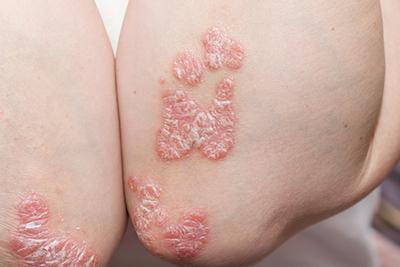
Psoriasis symptoms often include dry, thick, raised skin patches covered by visible scale. The affected skin may itch, burn, sting, crack, or feel painful. Psoriasis can also affect the scalp, nails, skin folds, hands, feet, or joints, and its appearance varies across skin tones.
It isn’t contagious. But it can be mistaken for eczema, fungal infection, dandruff, or simple dry skin, especially during an early flare.
What Do Psoriasis Patches Look and Feel Like?
Plaque psoriasis commonly produces raised areas with clear borders. On lighter skin, patches may look pink or red with silvery-white scale. On darker skin, they may appear violet, dark brown, gray, or deeper than the surrounding skin.
The surface can shed flakes, while the skin underneath feels tight or sore. Scratching may create cracks or bleeding points. Scalp psoriasis can extend beyond the hairline or form thick scale that resembles severe dandruff.
| Psoriasis pattern | Common appearance | Frequent location |
| Plaque | Raised, scaly patches | Elbows, knees, scalp |
| Guttate | Small drop-like spots | Trunk and limbs |
| Inverse | Smooth irritated patches | Skin folds |
| Pustular | Pus-filled bumps | Localized or widespread |
A skin-care reading index may help organize general articles, but photographs from the internet cannot confirm which rash you have.
Which Signs Appear Beyond the Skin?
Fingernails and toenails may develop small pits, discoloration, thickening, crumbling, or separation from the nail bed. These changes can be mistaken for fungal nail disease, so visual inspection alone may not be enough.
Some people with psoriasis develop joint pain, stiffness, swelling, or tenderness associated with psoriatic arthritis. Symptoms may involve fingers, toes, knees, ankles, or the back. Morning stiffness and swollen digits deserve attention, particularly when they occur alongside psoriasis.
The hidden burden is often the discomfort. Even a smaller plaque can interrupt sleep if it burns or itches constantly. Location matters too: patches on the palms, soles, genitals, or face may have a greater functional impact than a larger patch hidden by clothing.
What Commonly Triggers a Psoriasis Flare?
Triggers differ between individuals. Recognized examples include stress, skin injury, infections, cold or dry weather, smoking, heavy alcohol use, and certain medicines. A cut, scrape, tattoo, sunburn, or repeated friction may be followed by new psoriasis in that area.
Keep a skin trigger diary recording infections, stressful periods, medication changes, weather, and skin injuries. Its limitation is that a flare can occur without an obvious cause, so the diary shouldn’t become a search for personal blame.
Never stop a prescribed medication because you suspect it is a trigger without speaking to the prescriber. Abruptly changing some medicines can create additional health risks.
How Is Psoriasis Distinguished From Similar Rashes?
A dermatologist may diagnose psoriasis by examining the skin, scalp, and nails and asking about symptom history. Occasionally, a small skin sample is examined when the diagnosis is uncertain.
Eczema usually causes strong itching and may ooze or crust, although the two conditions can overlap in appearance. Ringworm often forms an expanding circular border. Seborrheic dermatitis tends to produce greasy scale in oil-rich areas. These are broad patterns, not reliable home tests.
The strongest diagnostic clue may be the full combination: sharply defined plaques, recurring locations, nail changes, family history, or joint symptoms. One blurry phone image usually doesn’t capture enough detail.
A skin care market notes folder can record products you have tried, but brand popularity doesn’t establish whether a treatment is safe for a specific type of psoriasis.
What Daily Habits May Reduce Irritation?
Use warm rather than hot water, avoid aggressive scrubbing, and moisturize after washing. Long hot showers can increase dryness and irritation, which may contribute to flares.
Choose fragrance-free products when fragrance stings or irritates your skin. A thick moisturizer may reduce dryness, but it won’t control every inflammatory plaque. Scalp scale should not be forcefully picked because skin injury can worsen symptoms.
Treatment depends on location and severity. Options may include topical medicines, light therapy, oral treatments, or injected medicines prescribed by a clinician. Every treatment has limitations, including side effects, monitoring requirements, inconvenience, or incomplete response.
Mistakes That Can Make Psoriasis Harder to Control
Scraping away every scale may leave the skin raw and trigger more irritation. Using harsh home remedies can cause chemical burns that resemble a worsening flare.
Another mistake is treating every scaly rash as psoriasis. Fungal infections and other conditions sometimes need completely different treatment. Applying the wrong medicine can hide important features and delay diagnosis.
Don’t assume mild-looking psoriasis has no broader impact. Nail disease, pain in sensitive locations, sleep disruption, or joint symptoms can justify medical care even when the total skin area appears small.
Red Flags: When to Get Medical Help
Seek urgent care when widespread redness, peeling, or pustules develop alongside fever, chills, weakness, dehydration, or a rapid decline in health. Severe erythrodermic or generalized pustular psoriasis can require immediate treatment.
Arrange prompt care for a painful swollen joint, a suddenly swollen finger or toe, worsening back stiffness, eye pain, or major nail changes. Contact a clinician if plaques appear infected, with increasing warmth, pus, rapidly spreading redness, or significant tenderness. A new severe rash after starting a medicine also requires prompt assessment.
Frequently Asked Questions
Can psoriasis patches disappear completely?
They may clear or become barely visible for a period, but psoriasis can return. Remission length differs, and trigger control does not guarantee that every flare will be prevented.
Is psoriasis caused by poor hygiene?
No. Psoriasis involves immune-system and skin-cell activity, not dirty skin. Excessive washing and scrubbing may increase dryness and irritation.
Can psoriasis affect only the scalp?
Yes. Some people mainly notice scalp symptoms. Persistent thick scale, itching, cracking, or plaques extending beyond the hairline should be professionally assessed.
Get the Rash Identified Before Chasing Triggers
Start by photographing changes in consistent lighting and noting where each patch appears. Record nail changes, joint stiffness, recent infections, and medication changes. Then take that record to a qualified clinician. Knowing what the rash is comes before buying another product or removing another food.
Review the AAD guide to psoriasis signs and symptoms for further information.
This article provides general education and is not a diagnosis or personalized medical advice.