
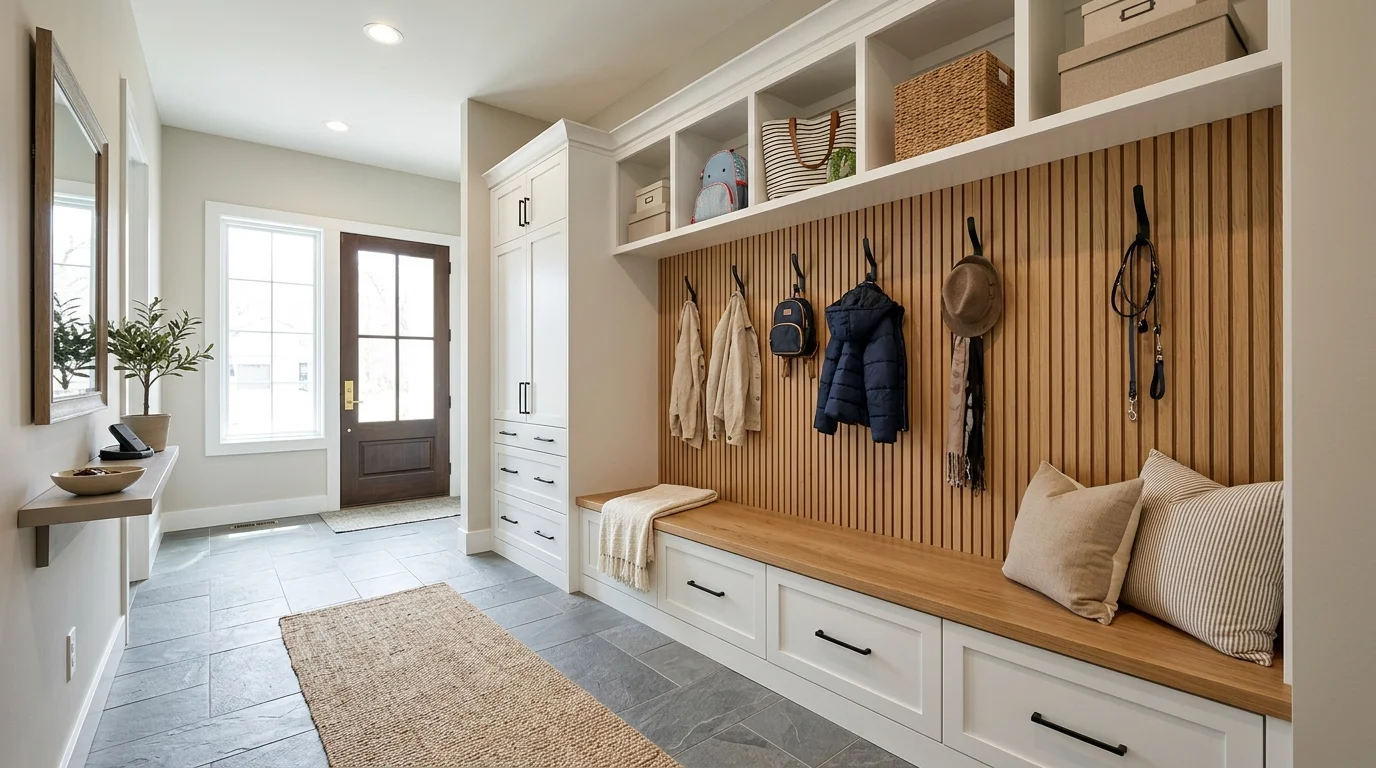
The front door tells the truth about how your home actually works. Shoes pile up, backpacks slide across the floor, dog leashes vanish, and one rainy afternoon can turn a clean entry into a small disaster. Smart mudroom design ideas solve that daily mess before it spreads into the rest of the house.
For many American families, the mudroom is no longer a luxury tucked behind a farmhouse kitchen. It is the hardworking buffer between school runs, grocery trips, sports practice, snowy driveways, and backyard chaos. A well-planned entry does more than hold coats. It protects your floors, lowers stress, and gives every person in the house a clear landing spot. That kind of order matters, especially in busy homes where mornings already feel too tight.
Good design here is practical first, but it should not feel cold. The best mudrooms blend storage, durability, and comfort in a way that fits real routines. A helpful home planning resource like organized home improvement ideas can support that bigger goal: making each part of the house work harder without making it feel stiff or overdesigned.
Mudroom Design Ideas That Start With Real Daily Habits
A mudroom fails when it is planned for a fantasy version of the household. The prettiest bench, cabinet, or basket will not help if it ignores how people come through the door. A strong entryway starts with the messy truth: who enters, what they carry, where dirt lands, and what gets dropped first.
Why Entryway Storage Should Follow Your Routine
A family in Michigan has different needs than a couple in Arizona. Snow boots, wet gloves, and heavy coats need deeper storage than sandals and sun hats. The mistake many homeowners make is copying a photo without asking whether that layout matches the climate, schedule, or size of the household.
Better planning starts with watching the door for a few days. Notice whether bags hit the floor before shoes come off. Notice whether kids reach for hooks or ignore hangers. Notice whether packages, keys, and mail need a small landing zone. The room should answer those habits instead of fighting them.
This is where a mudroom becomes calmer than a standard entry closet. Hooks belong where arms naturally reach. Shoe storage belongs where people sit or stand to remove shoes. A charging drawer works better near backpacks than across the room. Small decisions like these make the space feel almost automatic.
How Traffic Flow Changes the Whole Entry
A mudroom is not only a storage zone. It is a traffic lane. When a bench blocks the garage door swing or a cabinet narrows the walkway, the room starts creating stress instead of solving it.
Most homes need a clear path from the outside door to the main living area. That path should stay open even when shoes, grocery bags, or a laundry basket pass through. A narrow mudroom may do better with wall hooks and slim shoe shelves instead of deep lockers. A wider space can carry a bench, cubbies, and closed cabinets without feeling cramped.
The counterintuitive truth is that less storage can sometimes create more order. When every inch is packed with furniture, the room feels tight and people stop using it well. Breathing room is not wasted space. It is what lets the mudroom do its job without turning every exit into an obstacle course.
Built-In Storage That Keeps Clutter From Winning
Once the daily flow is clear, storage becomes much easier to plan. Built-ins can look polished, but their real value comes from assigning a home to the things that usually wander. Shoes, coats, bags, umbrellas, pet items, and sports gear all need a place that makes sense at the exact moment someone walks in.
What Makes Lockers Work for Busy Families?
Lockers work because they remove debate. Each person gets a defined zone, and that zone becomes the first stop after entering the house. For families with school-age kids, this can prevent the classic trail of backpack, jacket, lunchbox, and shoes across the kitchen.
The best lockers mix open and closed storage. Open hooks handle daily jackets and bags because doors slow people down. Closed cabinets work better for seasonal gear, backup supplies, or items you do not want on display. A bench below the lockers gives kids a clear place to sit, which makes shoe removal faster and cleaner.
A real-world example helps here. In a suburban Texas home with three children, one tall locker per child can carry a backpack hook, a coat hook, a shoe drawer, and a small upper shelf for hats. That setup may look simple, but it removes dozens of tiny daily decisions. The room stops asking people to be organized. It guides them there.
Where Hidden Storage Beats Open Shelving
Open shelves look charming when they hold three matching baskets and one folded throw. Real homes are less tidy. Baseball caps, sunscreen, gloves, dog towels, and mismatched shoes rarely look magazine-ready. Hidden storage protects the room from visual noise.
Closed drawers under a bench are perfect for shoes that get used often but do not need to be seen. Tall cabinet doors can hide cleaning tools, reusable shopping bags, and bulk paper goods. Even a shallow wall cabinet can hold keys, sunglasses, pet waste bags, and mail before they spread across the kitchen counter.
There is a tradeoff, though. Hide too much and the system becomes annoying. Daily items should stay easy to grab. Occasional items can disappear behind doors. That balance matters more than the cabinet style, because a beautiful mudroom that nobody uses is only a decorated hallway.
Durable Materials That Handle Weather, Pets, and Kids
A mudroom takes the hit so the rest of the house does not have to. That means materials matter more here than they do in many other rooms. A delicate floor, soft paint finish, or weak bench surface may look good for a month, then start showing every wet boot and muddy paw print.
Which Mudroom Flooring Works Best in American Homes?
Flooring should be chosen for cleaning first and appearance second. Porcelain tile is a strong choice because it handles water, grit, and salt better than many wood products. Luxury vinyl plank can also work well in homes that want warmth underfoot without constant worry. Natural stone can look rich, but it needs sealing and may feel cold in northern states.
The best floor also has texture. A slick surface near an exterior door can become a hazard during rain or snow. Matte finishes and subtle grip make the room safer without making it feel industrial. A washable runner can soften the look, but it should never be the only defense against wet shoes.
One unexpected point: darker floors do not always hide dirt better. Pale dust, road salt, and pet hair can stand out sharply on deep charcoal or black surfaces. A mid-tone floor with natural variation often hides daily mess better than both extremes.
Why Wall Finishes Need More Respect
Walls in a mudroom get touched, bumped, and scraped. Backpacks swing into corners. Dogs shake off water. Kids lean on the wall while pulling off shoes. Standard flat paint usually loses that fight fast.
A satin or semi-gloss finish gives the walls a better chance because it wipes clean more easily. Beadboard, vertical paneling, or washable wall panels can protect high-contact areas while adding texture. The key is to use these materials where contact happens, not everywhere out of habit.
Hooks also need proper backing. A row of hooks screwed into drywall may hold for a while, then fail when winter coats and loaded bags pile on. A wood rail attached to studs gives the wall real strength. That small construction detail can decide whether the mudroom still works five years from now.
Style Choices That Make the Mudroom Feel Like Part of the Home
A mudroom should work hard, but it should not feel like a storage unit attached to the house. The best designs connect with the style of nearby rooms while still accepting that this area gets messy. Beauty and function do not compete here. They keep each other honest.
How Color Can Calm a Busy Entry
Color has a strong effect in a small utility space. Bright white can look crisp, but it may show every scuff near a family entrance. Deep colors can feel rich, but they may make a narrow mudroom feel tighter. Soft greens, warm grays, muted blues, and creamy neutrals often strike a better balance.
Cabinet color should also fit the amount of natural light. A windowless garage entry may need lighter cabinetry to avoid a cramped feeling. A sunlit side entry can handle deeper tones without feeling heavy. The goal is not to chase trends. The goal is to make the room feel steady when life outside the door is not.
Hardware can bring quiet character. Aged brass, matte black, brushed nickel, or simple wood knobs can change the mood without adding clutter. Keep the choices consistent with the kitchen or nearby hallway so the mudroom feels connected rather than tacked on.
What Small Details Make Organized Entryways Feel Finished?
Small details decide whether a mudroom feels intentional. A tray for wet shoes, a labeled basket for each child, a low hook for younger kids, and a small mirror near the exit can all make the room easier to use. None of these choices are fancy. That is why they work.
Lighting deserves more attention than it usually gets. A single dim ceiling light can make the space feel like a back hallway. A brighter fixture, under-cabinet lighting, or even a small wall sconce can make morning departures easier. Good light helps people find keys, match shoes, and spot dirt before it reaches the living room.
The final layer is restraint. A mudroom does not need signs, extra pillows, and decorative clutter fighting for space with raincoats and boots. One piece of art, one plant, or one warm wood surface may be enough. The room already has a job. Let it do that job with confidence.
Conclusion
A better mudroom begins with honesty, not decoration. You need to understand the traffic, weather, people, pets, and small daily messes that move through your entry before choosing cabinets or colors. Once that truth is clear, every design choice becomes easier.
Strong mudroom design ideas bring order without demanding perfect habits from the people who live there. They give shoes a place to land, coats a place to hang, and busy mornings a little more breathing room. That may sound small, but homes are shaped by small repeated moments. When the entry works, the whole house feels lighter.
Do not build the mudroom for a photo. Build it for the Tuesday morning when someone is late, the dog is wet, and the kids cannot find their shoes. Start by fixing the one entry problem that slows your home down most, then design around that truth until the space finally works like it should.
Frequently Asked Questions
What are the best mudroom storage ideas for small entryways?
Use wall hooks, slim shoe shelves, and a bench with drawers instead of bulky cabinets. Small mudrooms work best when storage stays vertical and the walking path remains clear. Closed bins can hide clutter, while open hooks keep daily coats and bags easy to reach.
How do you design a mudroom without a separate room?
Create a mudroom zone near the main entrance with hooks, a narrow bench, shoe storage, and a small landing tray. Even one wall in a hallway, garage entry, or laundry room can work if each item has a clear place.
What flooring is best for a mudroom with pets?
Porcelain tile and luxury vinyl plank are strong choices for homes with pets. Both handle muddy paws, water, and frequent cleaning better than many delicate surfaces. Choose a textured finish to reduce slipping, especially near exterior doors.
How can I make a mudroom look less cluttered?
Mix open storage with closed storage. Keep daily items on hooks and place messy extras behind cabinet doors or inside drawers. Matching baskets can help, but the bigger fix is giving every category one assigned home.
Should a mudroom have a bench?
A bench is worth adding when space allows because it makes shoe removal easier and creates storage below. In a narrow entry, choose a floating bench or a slim built-in seat so the walkway does not feel blocked.
What colors work best for mudroom cabinets?
Muted greens, warm grays, soft blues, cream tones, and natural wood finishes work well in many homes. Pick a color that connects with nearby rooms and hides daily marks better than bright white in high-contact areas.
How do I organize kids’ items in a mudroom?
Give each child a separate hook, shoe space, and basket or cubby. Labels help younger kids follow the system without reminders. Keep their storage low enough to reach, or the floor will become the default drop zone.
Can a laundry room also work as a mudroom?
A laundry room can work well as a mudroom if the layout leaves enough space for traffic and storage. Add hooks, shoe trays, and a bench near the entry door. Keep laundry supplies separate so the room does not feel overloaded.